Starting a scrub brand is less about having a great logo and more about a short list of decisions made in the right order: who you are selling to, what makes your scrubs worth switching to, how few styles you can launch with, and which manufacturer can make them consistently. This guide walks through those decisions step by step, from the first idea to the first reorder. It is written for founders, nurses and clinicians turning an idea into a product, and for uniform companies adding their own line.
1. Pick a customer before you pick a style
“Healthcare workers” is not a customer. A night-shift ICU nurse, a dental hygienist, a veterinary technician, a nursing student and a clinic manager buying for twenty staff all want different things. Choose one group you understand well and can reach. Good starting niches are often ones that larger brands serve poorly, for example:
- Extended sizes, with plus size scrubs graded properly rather than scaled up
- Pregnancy, with maternity scrubs that work through a full shift
- Coverage, with modest scrubs and matching hijabs
- Students, through nursing school scrub programs where a whole cohort buys the same colors
- Small clinics and practices that want their name on every top
2. Decide why someone would switch
Write one sentence your customer would agree with: “These scrubs are better for me because…”. The answer is usually one of fit, fabric, function (pockets, sleeves, length), size range, color, or the way you sell (for example, a clinic program with reorders on demand). If your reason is about the garment itself, you may need your own design. If it is about brand, community or service, a manufacturer’s existing styles under your label may be enough. Our comparison of OEM vs private label scrubs explains the difference.
3. Launch with a small range
Every style and every color multiplies the stock you must buy before you have sold anything. Most new brands do better with:
- Two or three styles, often one top and one or two pant shapes
- Two to four colors, starting with the shades your niche wears most
- A full size range in those few styles rather than a partial range across many
Manufacturers set minimums per style, per color or per order, so ask how sizes and colors can be split inside the minimum before you plan quantities.
4. Choose one fabric and understand it
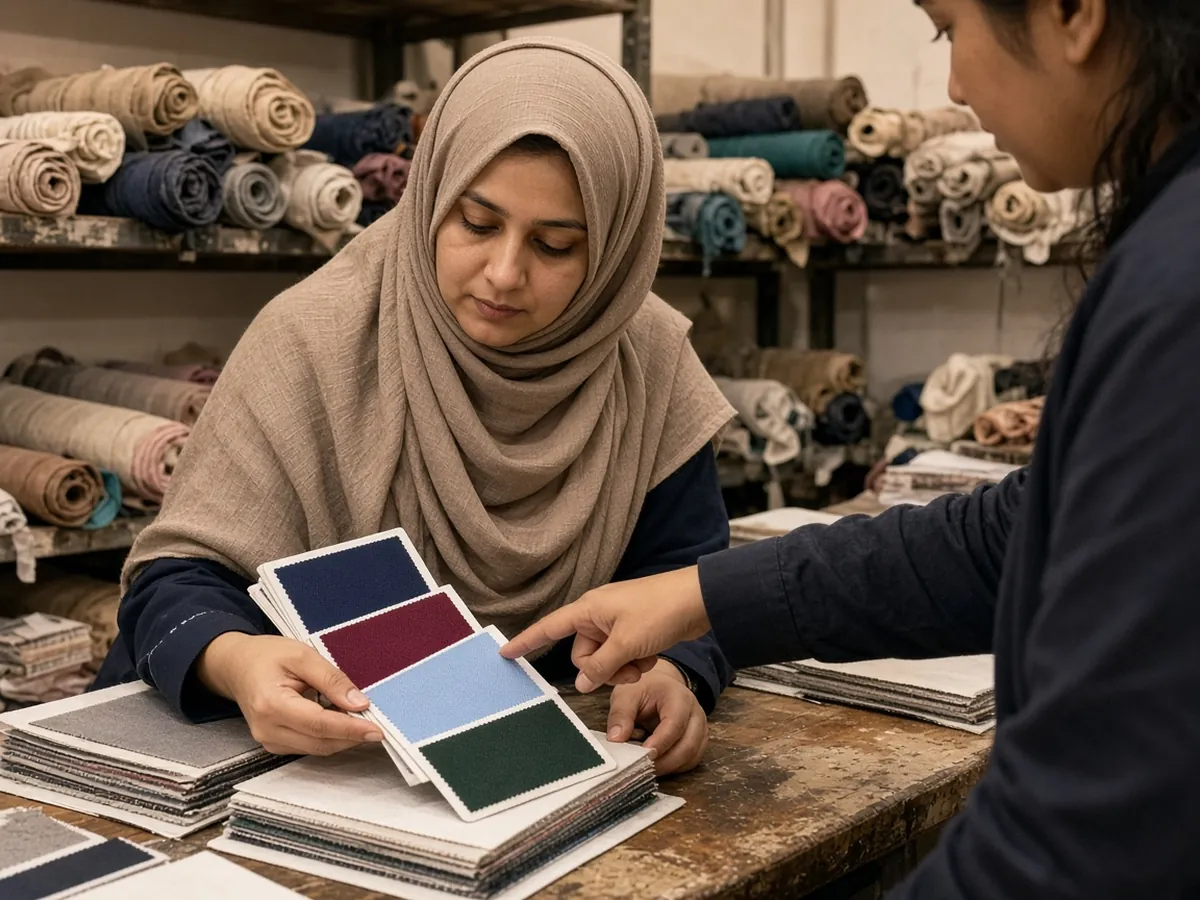
Fabric decides how your scrubs feel, stretch, wash and keep their color, and it is the hardest thing to change after launch. Ask for the composition and weight (GSM) of every option, and wear and wash samples before choosing. Stretch blends with spandex suit active roles; cotton-rich fabrics suit customers who prefer a natural feel. Be careful with performance claims: if you plan to say a fabric is antimicrobial, fluid resistant or certified, get the test report or certificate first. Our scrub fabrics guide compares the common blends.
5. Get the size chart right
Returns in scrubs are mostly about fit. Ask your manufacturer for its full measurement chart, check that sizes are graded from one base pattern so a medium fits the same across styles, and test the sample on more than one body. Publish a clear size chart with your product; ours is at scrub size chart as an example of the measurements to show.
6. Plan labels and packaging
Decide what goes inside and on each garment: a woven neck label with your brand, a care label, a hang tag, and any embroidered or printed logo. If you sell in the United States, clothing labels must show fiber content, country of origin and care instructions; check the current FTC labeling rules or ask your customs broker before you order labels. Agree packaging in writing too: folded or hung, individual bags, size stickers and carton marks.
7. Choose a manufacturer
Look for a factory that makes the garments itself, offers a sample before bulk, can show how it keeps reorders identical, and quotes a delivered price you can compare. Our guide on how to find a scrub manufacturer lists the questions to ask and the warning signs to watch for.
8. Wear-test the sample
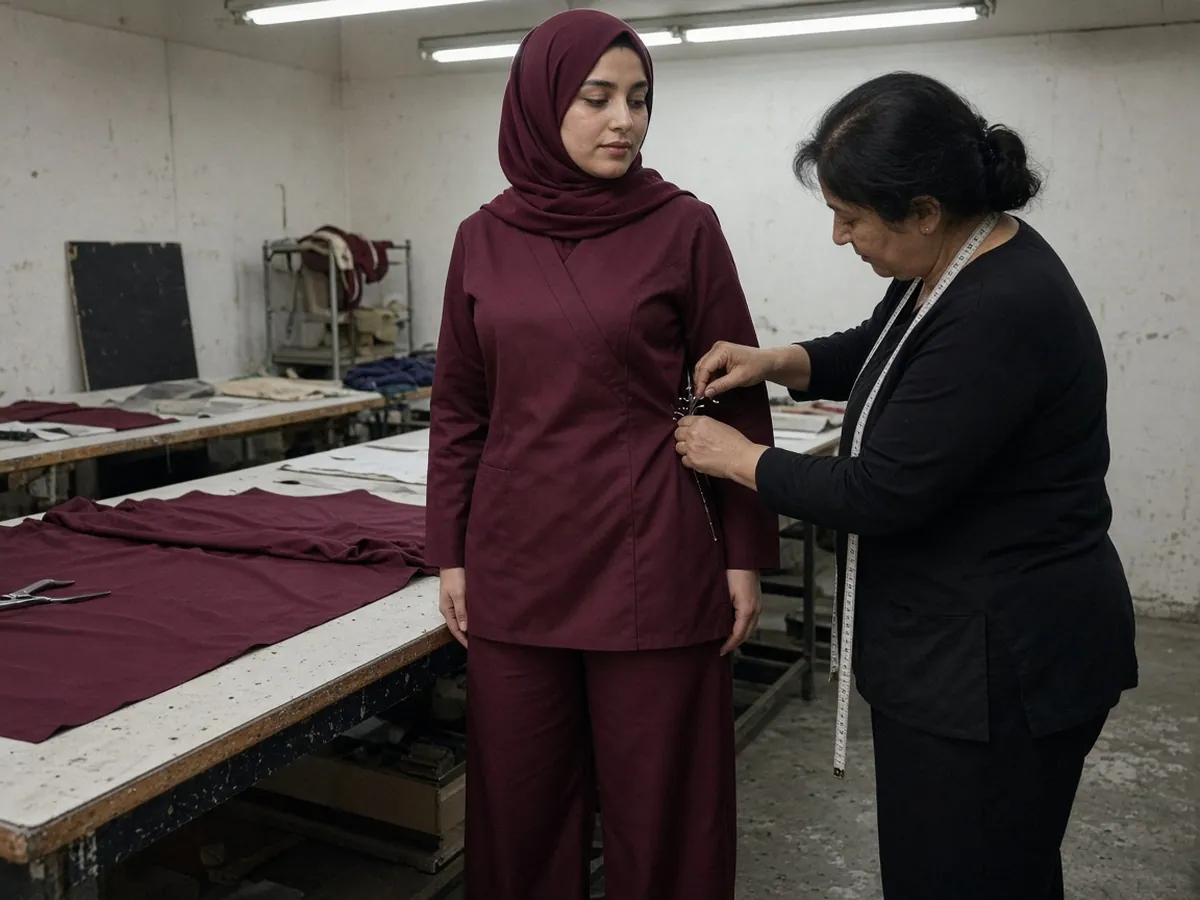
Treat the sample as the most important step of the whole project. Wear it through real shifts, wash it several times at the temperatures your customers use, and check pockets, seams, color and shrinkage. Ask people in your niche to try it. Changes are cheap now and expensive after the fabric is cut. Approve the sample in writing; it becomes the standard the bulk order is checked against.
9. Price from landed cost, not unit cost
Your real cost per piece is the unit price plus everything needed to get it sellable in your warehouse: samples, branding, packaging, freight, duties, customs clearance and local delivery. A delivered duty paid (DDP) quote includes the shipping and import parts. Set your selling price so the margin also covers marketing, returns, payment fees and unsold sizes. For a worked view of the shipping side, see importing medical scrubs from Pakistan to the USA.
10. Decide where you will sell
Most new scrub brands start with one main channel and add others once stock turns over:
- Your own online store, which keeps the margin and the customer relationship
- Marketplaces, which bring traffic but take fees and give you less control
- Direct sales to clinics, practices and schools, which mean larger, repeat orders with your name on the uniform program
- Uniform shops and distributors, who buy wholesale and resell
11. Plan the reorder before the first order ships
Customers come back for the same fit and the same shade. Before your first order is delivered, confirm with your manufacturer that the approved sample, the color standard and the pattern are kept on file, and ask how long a reorder takes. Track which sizes and colors sell fastest so the second order is better balanced than the first.
Launch checklist
- One clearly defined customer group
- One sentence that explains why they would switch
- Two or three styles, a few colors, a full size range
- One tested fabric, with composition and weight on record
- A size chart you have checked against real bodies
- Label artwork that meets labeling rules where you sell
- A manufacturer that samples first and documents the approved standard
- A landed-cost price and a selling price with room for marketing and returns
- One main sales channel
- A reorder plan
Starting a scrub brand with GoMedWear
GoMedWear is a scrub manufacturer with its own factory in Sialkot, Pakistan, and works with new and established brands, distributors and institutions:
- Minimum order of 50 pieces per style
- Sizes XS to 5XL from computer-graded patterns
- 30+ stock colors, or a Pantone match for your brand color
- A sample first, then production in 15 to 25 days after sample approval
- Woven labels, care labels, hang tags and embroidery applied in our factory
- Patterns and color runs kept on file so reorders match
- DDP door-to-door delivery, or FOB Karachi with your own forwarder
Most founders start with our private label scrubs program; brands with their own designs use OEM manufacturing. If your brand is built around modest wear, our guide on launching a modest scrubs line covers the extra decisions. When you are ready, request a sample.
Frequently asked questions
How much does it cost to start a scrub brand?
It depends mainly on how many styles and colors you launch with and whether you develop your own design. The main costs are samples, the first production order, labels and packaging, shipping and duties, and marketing. Keeping the first range small is the most effective way to control the starting budget.
How many scrubs should I order first?
Enough to offer every size in your few launch styles and colors, and no more. Check the manufacturer’s minimum and how sizes and colors can be split inside it, then plan to reorder based on what sells.
Do I need to design my own scrubs?
No. Many brands launch with a manufacturer’s existing styles under their own label and add their own designs later. You need your own design only when the garment itself is your reason for customers to switch.
How long does it take to launch?
Allow time for choosing a manufacturer, one or more sample rounds, production and shipping. At GoMedWear production takes 15 to 25 days after you approve the sample, plus delivery time to your address.
What labels do scrubs need in the United States?
Clothing sold in the US generally needs fiber content, country of origin and care instructions on the label. Check the current FTC rules or ask your customs broker for your specific products.