
“Private label” and “OEM” are the two ways a scrub brand gets its own product made, and suppliers do not always use the words the same way. The choice decides how much development you pay for, how long the first order takes and how different your scrubs can be from everyone else’s. This guide explains both routes in plain terms, shows where the costs and risks sit, and helps you pick the one that fits the stage your brand is at.
The short answer
Private label means a manufacturer’s existing, already-developed styles made under your brand: your labels, your colors, your logo. OEM (original equipment manufacturing) means the factory builds a garment to your own design and specification, usually from a tech pack. A third route, buying ready catalogue styles with no branding, is simply wholesale.
| Private label | OEM | Catalogue / wholesale | |
|---|---|---|---|
| What you bring | Logo, label artwork, color choice | A tech pack, sketch or reference garment | A style and quantity |
| Who owns the base pattern | Usually the manufacturer | Agree it in writing; normally built to your spec | The manufacturer |
| Development work | Little: the style already fits and is costed | Pattern making, fabric sourcing, one or more sample rounds | None |
| How different your product can be | Different in branding, color and trims | Different in fit, construction and fabric | Not different |
| Minimums | Lowest of the custom routes | Quoted per project, usually higher | Lowest |
| Time to first delivery | Shortest of the custom routes | Longest: development comes first | Shortest |
What private label means for scrubs
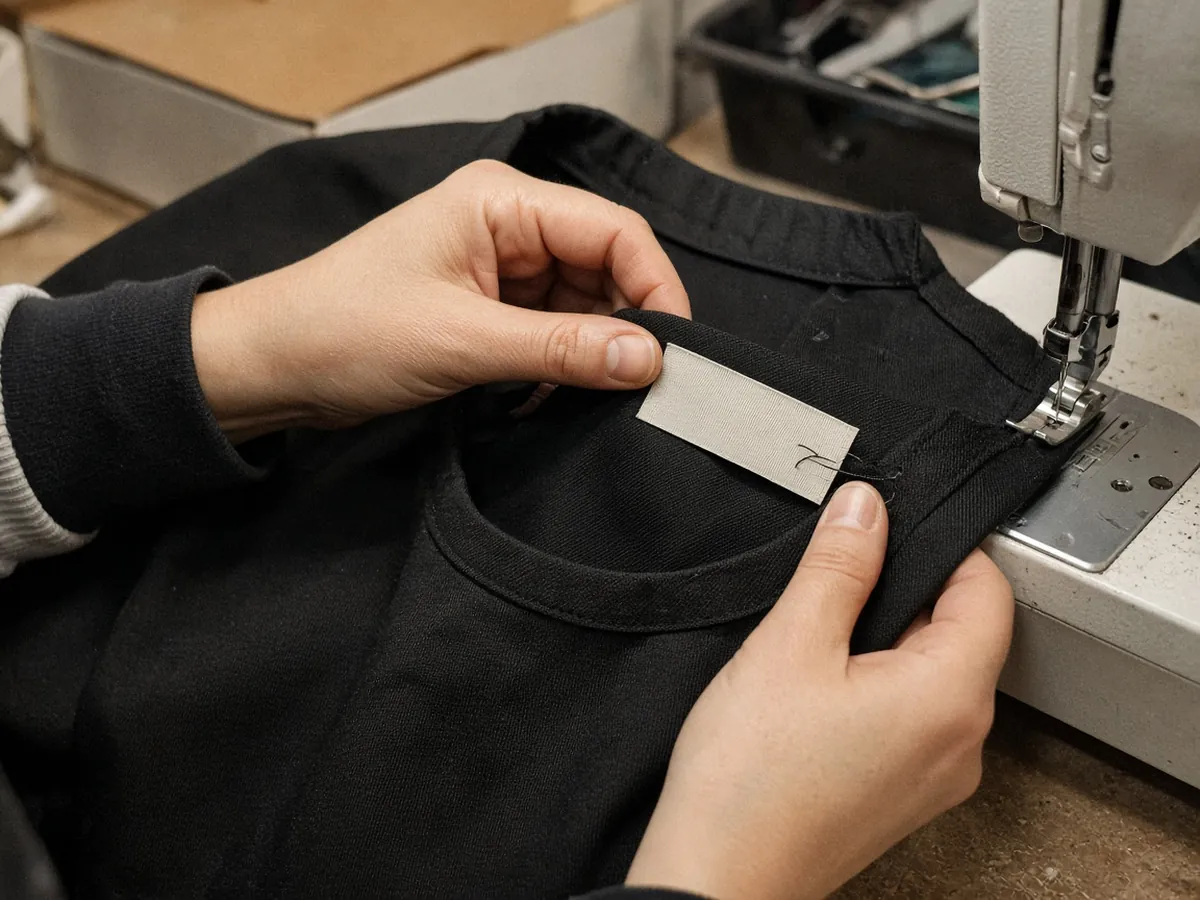
In a private label program you choose from styles the factory has already patterned, graded and produced, then make them yours. Typical changes are the woven neck label, care label and hang tag, the color (from stock or matched to your brand color), embroidery or printing, and small trim choices. The fit, the construction and the fabric stay as developed, which is exactly why private label is quicker and cheaper: the expensive work of getting a garment right across a full size range has already been done and tested.
The trade-off is that other brands may sell a similar base garment. Your difference comes from your brand, your color story, your customer service and the market you sell to, not from a unique cut.
What OEM means for scrubs
OEM starts from your idea rather than the factory’s. You supply a tech pack, or sketches and a garment whose fit you like, and the factory develops the pattern, sources or develops the fabric, makes a sample, and repeats until you approve it. Bulk production is then run against that approved sample.
OEM is how you get something the market does not already have: a pocket layout built for a specific specialty, a different rise or leg shape, a sleeve designed for a dress code, a particular fabric weight or finish. It costs more up front because every one of those decisions needs development and checking across sizes, and fabric that is not stock may carry its own minimum at the mill.
Some suppliers use a third term, ODM (original design manufacturing), for designs the factory creates and then customizes for you. Because the terms overlap, always ask a supplier to describe in writing what their “private label” or “OEM” includes.
Which route fits your brand?
Answer these questions honestly:
- Is your difference the product or the brand? If customers will buy because of your name, community or service, private label is enough. If they will buy because the garment itself does something others do not, you need OEM.
- Do you have a tech pack? Without one, OEM is still possible, but expect extra time while the factory turns your references into a specification.
- How much can you spend before you sell anything? OEM adds pattern work, sample rounds and possibly fabric development before the first unit ships.
- How fast do you need stock? A launch date, a school term or a hospital rollout often favors private label.
- How sure are you about demand? A smaller private label order lets you learn which colors and sizes sell before you invest in your own design.
Many brands do both over time: they launch with private label to test the market, then develop one or two signature styles through OEM once they know what their customers ask for.
Where the money goes
Comparing two quotes only on unit price hides most of the difference between the routes. List each of these for both:
- Pattern development and grading (OEM only, or for any change to a private label base)
- Samples: how many rounds are included, and who pays for shipping them
- Fabric: stock fabric versus a custom fabric, and any mill minimum
- Branding: labels, hang tags, embroidery or print set-up
- Packaging: folding, bagging, size stickers, carton marks
- Freight, duties and customs clearance, unless the price is delivered duty paid (DDP)
Our guide on how to find a scrub manufacturer explains how to read ex-factory, FOB and DDP prices side by side.
Patterns, designs and reorders
Agree before production who owns what. With private label, the base pattern normally stays with the manufacturer and only your branding is yours. With OEM, make sure the approved pattern and specification are recorded as yours and kept on file for reorders. In both cases, ask how the factory keeps a reorder identical to the first order: the approved sample, the color standard and the fabric source should all be documented.
Branding is the same on both routes
Whichever route you choose, the branding options are similar: woven neck labels, printed care labels, hang tags, embroidered or printed logos, and your own packaging instructions. Fabric and fit are where the routes differ. Our scrub fabrics guide explains the common blends if you are deciding what to develop.
How the two routes work at GoMedWear
GoMedWear manufactures scrubs, lab coats, caps and medical wear in its own factory in Sialkot, Pakistan, and offers both routes:
- Private label scrubs: our developed styles under your brand, from a minimum of 50 pieces per style
- OEM manufacturing: we build to your tech pack, sketch or reference garment; OEM minimums are quoted per project because of pattern and fabric development
- Sizes XS to 5XL from computer-graded patterns, 30+ stock colors or a Pantone match
- A sample first, then production in 15 to 25 days after you approve it
- Labels, hang tags and embroidery applied in our factory; printing by DTG, screen or sublimation
- DDP door-to-door delivery, or FOB Karachi if you use your own forwarder
Not sure yet? Request a sample of a private label style and check the fit and fabric before you decide whether you need your own design.
Frequently asked questions
What are private label scrubs?
Scrubs made by a manufacturer from its existing styles and sold under another company’s brand. The brand chooses the labels, colors and logo; the manufacturer supplies the developed garment.
What does OEM mean in clothing?
Original equipment manufacturing: the factory produces a garment to the buyer’s own design and specification. In apparel it usually means the buyer provides a tech pack or reference and owns the resulting design.
Is private label cheaper than OEM?
Usually, because private label skips pattern development and repeated sampling, and the minimums are lower. OEM costs more before the first order but gives you a product others cannot simply copy from the same catalogue.
Can I change a private label style?
Small changes such as color, labels, embroidery and some trims are normal. Changes to fit or construction turn the job into development work, which is closer to OEM and is quoted separately.
Do I need a tech pack to start?
Not for private label. For OEM a tech pack speeds things up, but a sketch plus a garment whose fit you like is enough for a manufacturer to build the specification with you.