
A hijab worn on a ward or in an operating room has a different job from one worn outside work. It has to stay in place through a long shift, cope with repeated washing, sit safely away from the clinical field and match the uniform. This guide is for uniform buyers, scrub brands and nurse managers choosing hijab options for clinical staff.
What makes a hijab suitable for nursing
| Requirement | What to look for |
|---|---|
| Stays in place | A pull-on, snap-back or tie design that does not rely on pins |
| Breathable | Lightweight sweat-wicking jersey rather than fashion fabric |
| Opaque | Fabric that does not show through in pale colors under clinical lighting |
| Comfortable for 12 hours | Flat-locked hems so nothing rubs at the jawline |
| Washable | Holds its shape and color through industrial laundering |
| Matches the uniform | Supplied in the same shade as the scrubs |
The main styles
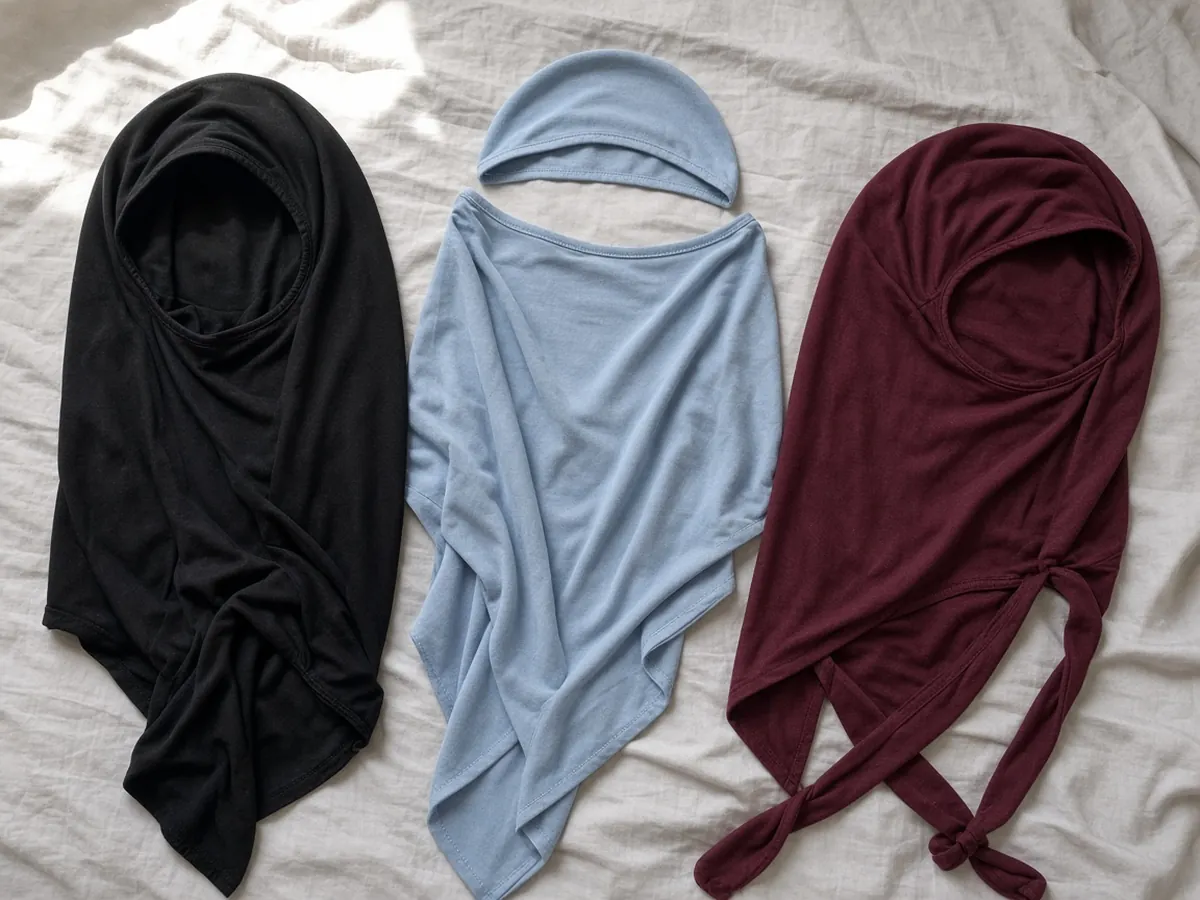
- Pull-on scrub hijab: a one-piece design with a shaped front and chest coverage, with no pins or ties. The simplest option for ward and clinic work.
- Snap-back hijab: an adjustable closure for quick changes between cases, often chosen in surgical and dental settings.
- Rear-tie hijab: adjustable ties at the back for a closer fit under or over a scrub neckline.
- Underscrub cap: a snug base layer worn beneath a personal hijab or a theater cap to keep hair fully contained.
See the medical hijab collection for these styles, and scrub caps and underscrub caps for the base layers.
Hijab and hospital dress codes
Dress codes differ between employers and between departments, so there is no single rule to quote. Three questions come up most often:
- Operating rooms: ask what head covering the department accepts in theater and whether staff may wear their own washable hijab or need a cap over it.
- Sleeves: some hospitals require staff to be bare below the elbows during patient care. Where that applies, a short-sleeve top with a removable long-sleeve underscrub is a common arrangement.
- Pins and loose ends: designs without pins and with the fabric secured close to the body are easier to approve.
If you are buying for an institution, get the written policy first and sample a style around it.
Why the uniform should include the hijab
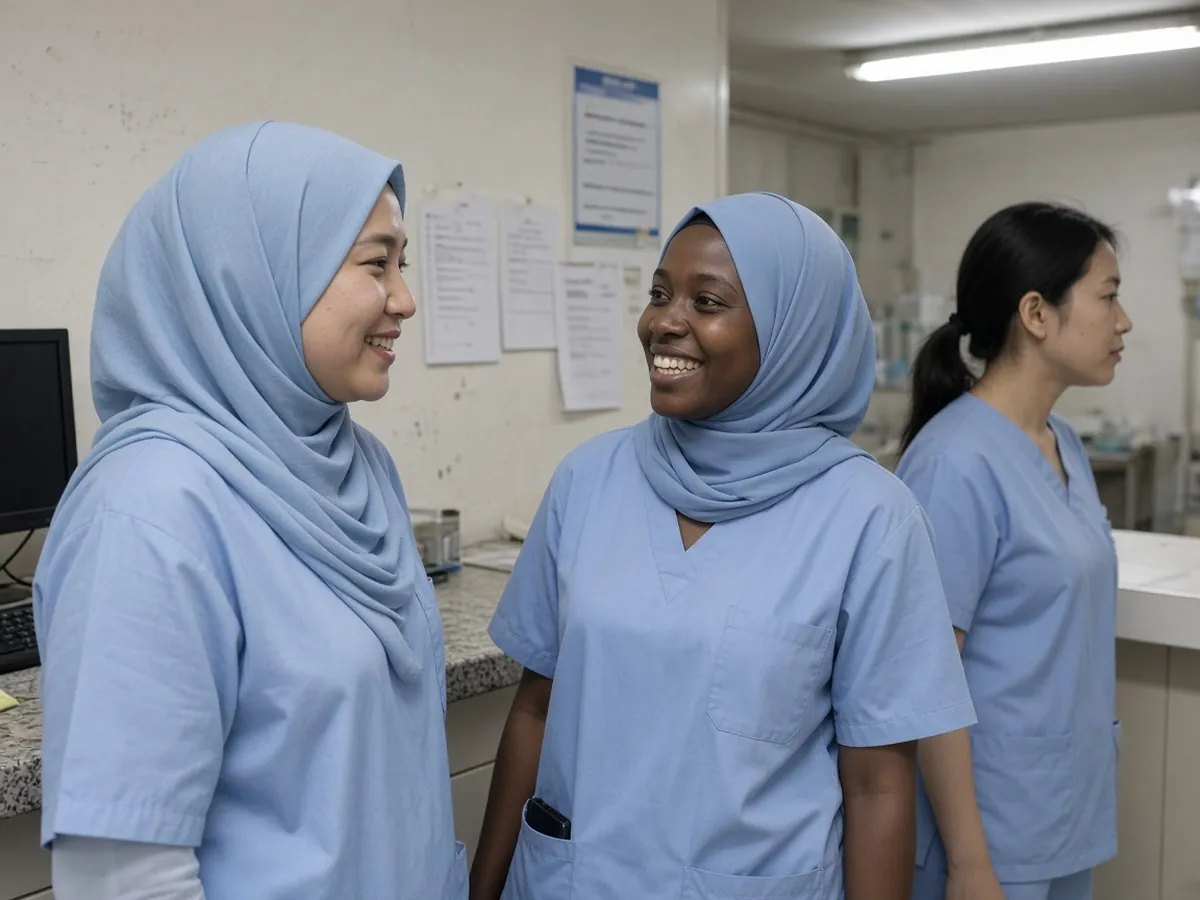
When staff supply their own hijab, the color is close to the uniform but rarely the same, and the two fade at different rates. Supplying the hijab with the uniform solves both problems. A hijab scrub set puts the tunic, trousers and hijab in one matched color, and a modest hospital uniform program extends that across a whole team.
What to ask a supplier
- Which hijab styles do you make, and in what fabric?
- Can the hijab be matched to our scrub color, and to a Pantone reference?
- Can hijabs and scrubs be ordered together?
- What is the minimum order and lead time?
- Can we see a sample before ordering?
- Can you add our label or logo?
At GoMedWear the minimum is 50 pieces per style, hijabs and scrubs can be combined on one order, and production takes 15–25 days after sample approval. Details are on our medical hijab manufacturer page.
Working in theater? See hijab in the operating room: options for surgical staff.