Ordering scrubs for one person is easy: they pick their size. Ordering for fifty or five hundred people is different. Guess the size split wrong and you end up with boxes of unused mediums while half the team waits for larges. This guide shows how uniform buyers, clinic managers and schools size a whole team accurately, and how to turn those sizes into an order.
Why team sizing goes wrong
- Sizes are guessed from headcount instead of measured
- Staff choose sizes from a different brand’s chart
- Tops and pants are assumed to be the same size for everyone
- Extended sizes, petite and tall lengths are forgotten until someone needs them
1. Get a size set before anyone chooses
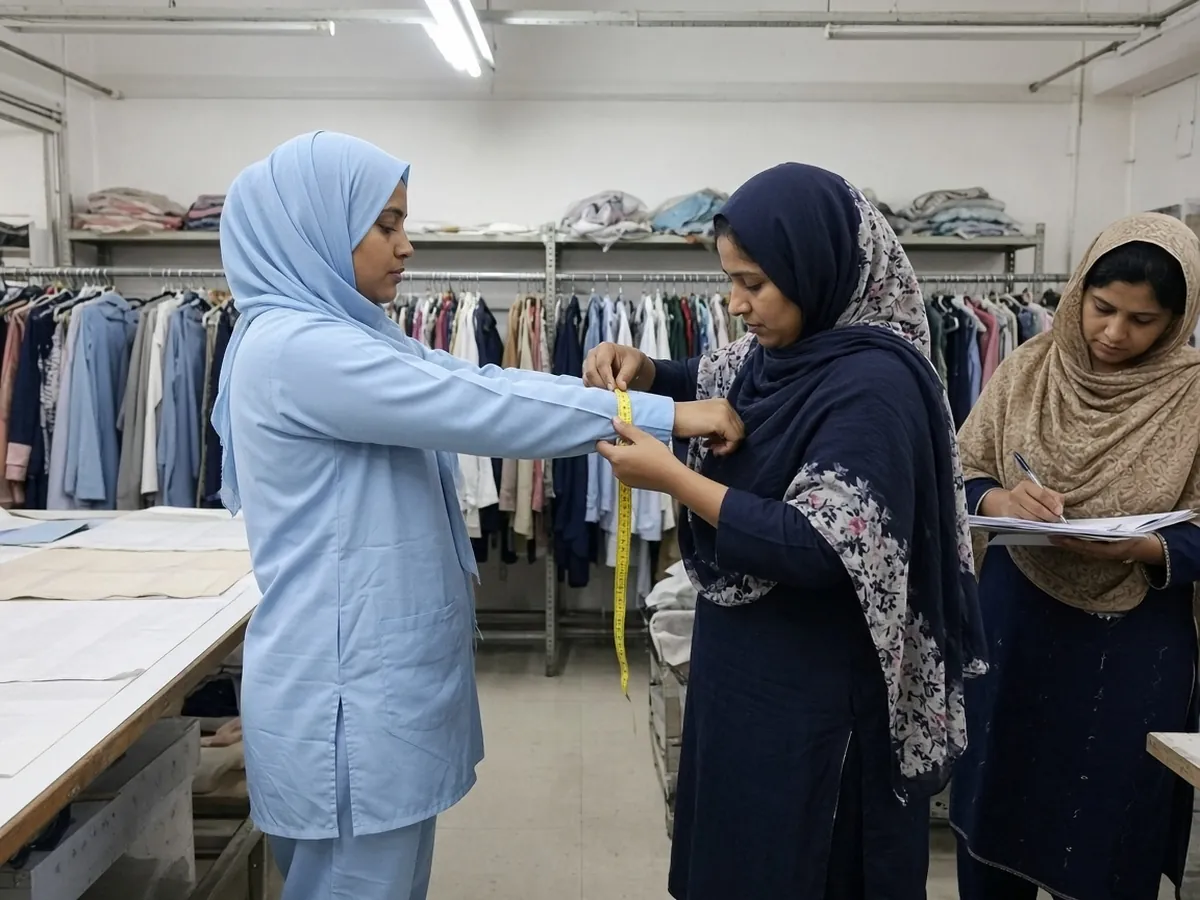
Charts help, but nothing replaces trying the actual garment. Ask your supplier for a size set of the exact styles you will order, in the same fabric. Different brands cut very differently, so a “medium” from another label is not a reliable guide.
2. Run fit sessions
Set up a short fitting slot by department or shift. Each person tries the top and pants separately and records:
- Top size and pant size, which are often different
- Pant length if regular, petite or tall options are offered
- Any need for maternity, extended sizes or modest options
For staff who cannot attend, use the published scrub size chart with body measurements, not the size they wear elsewhere.
3. Turn the results into a size split
Count how many people need each size, separately for tops and pants, then multiply by the number of sets each person receives. Add a reserve across the most common sizes for new starters and replacements. Keep the record: it becomes the size split for every reorder, adjusted as the team changes.
| Step | Result |
|---|---|
| Fit session results | One top size and one pant size per person |
| × sets per person | Pieces needed per size |
| + reserve | Extra pieces in the busiest sizes |
| Check against the minimum | How sizes and colors are split inside each style’s minimum |
4. Plan for every body
A program only works if it fits everyone. Check that the supplier’s size range covers the whole team before you commit, and include separate lines where needed:
- Plus size scrubs graded for the larger sizes, not simply scaled up
- Maternity scrubs for staff who need them during the program
- Petite and tall lengths where pants are often too long or short
5. Make sure sizes stay the same on reorders
Your size split is only useful if a medium in the reorder fits like a medium in the first order. Ask how patterns are graded and kept on file. At GoMedWear, patterns are graded by computer from XS to 5XL from one base pattern, and fabric is cut in bundles for consistent sizing; see our quality control process.
Sizing a team with GoMedWear
GoMedWear manufactures scrubs in its own factory in Sialkot, Pakistan, for hospitals, clinics, schools and uniform distributors. We supply sample size sets so your team can try the actual garments, produce from a minimum of 50 pieces per style in sizes XS to 5XL, and keep your patterns on file for reorders. Read how to set up a scrub uniform program, or request a sample.
Frequently asked questions
How do I know which scrub sizes to order for my staff?
Run fit sessions with a size set of the exact styles, record each person’s top and pant size, and multiply by the number of sets per person.
Are scrub top and pant sizes the same?
Often not. Record them separately; many people wear a different size top and pant.
How much extra should we order for new staff?
Keep a reserve in the most common sizes based on how often your team changes, and refill it with each reorder.
Can sizes be mixed within the minimum order?
Ask your supplier how sizes and colors can be split inside each style’s minimum before you plan quantities.