
A scrub uniform program replaces one-off purchases with a planned system: agreed styles, colors by role, a size plan, a budget and a reorder routine. Done well, it makes a hospital, clinic group or school look consistent, keeps staff comfortable and stops the scramble every time new people join. This guide walks through setting one up, from the first decisions to the first reorder.
1. Decide what the program must achieve
Write down the goals before choosing garments. Common ones are:
- Patients can tell roles apart at a glance
- Staff look consistent across sites or departments
- Uniforms meet infection-control and dress-code policies
- Staff have enough sets to rotate through washing
- New starters are issued a uniform on day one
Involve the people who wear the scrubs and the people who approve the budget early. A program that staff dislike will be worked around.
2. Assign colors by role
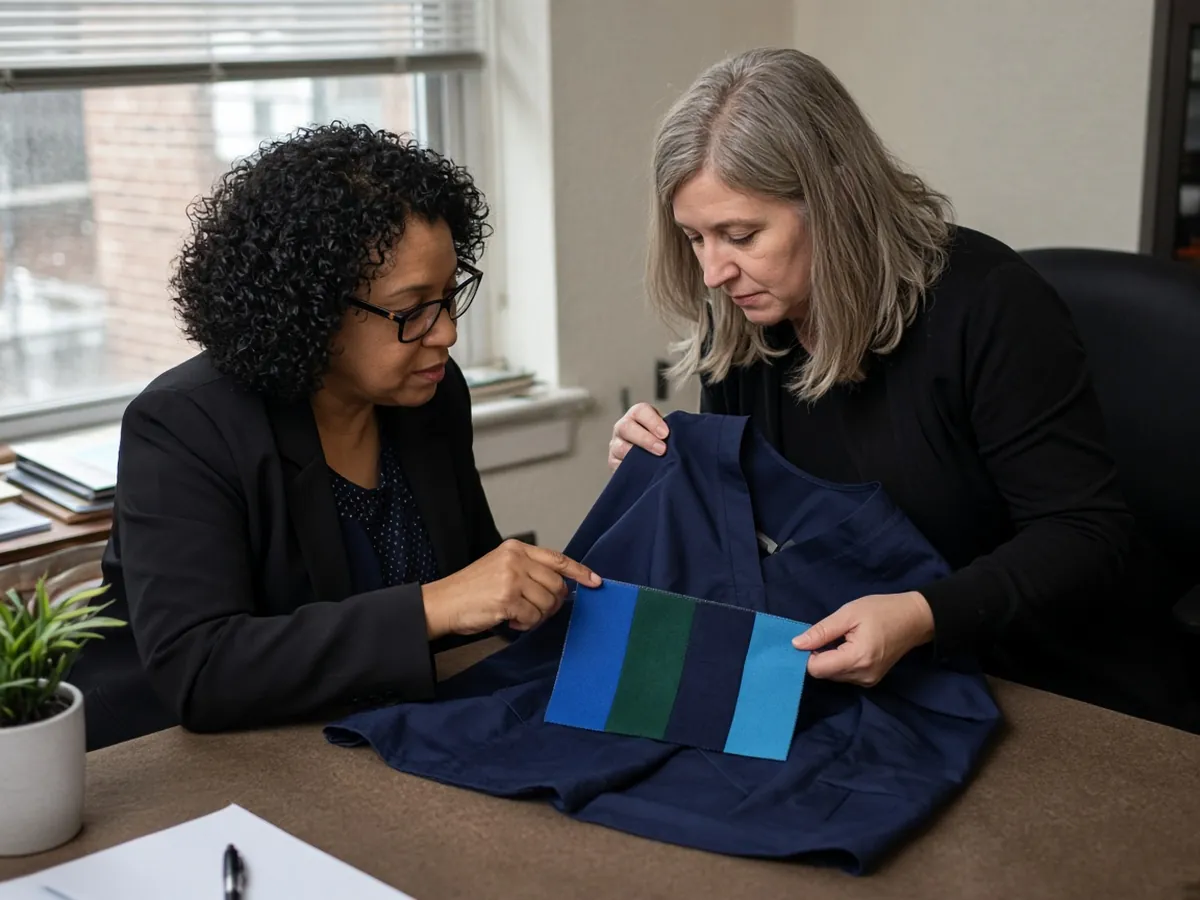
Color coding is the most visible part of a program. Keep the scheme simple, with one color per role group, and publish it so patients and staff understand it. Choose shades that stay available for reorders: stock colors are easiest, and a Pantone-matched brand color works if the supplier keeps the color standard on file. See scrubs by colour for the shades most programs use.
| Decision | Questions to answer |
|---|---|
| Role groups | Which roles need a distinct color? Which can share? |
| Shades | Stock color or brand color? Will it show stains or fade visibly? |
| Branding | Logo, department or name embroidery? Where on the garment? |
| Options | Long sleeves, jackets, caps or modest options for staff who need them? |
3. Choose a small set of styles
Pick one or two top styles and one or two pant styles, plus layers such as scrub jackets if your sites are cold. Fewer styles mean simpler ordering, lower stock and a more uniform look. Include options for staff who need them, such as maternity, extended sizes or modest uniforms, so nobody is left out of the program.
4. Plan sizes for the whole workforce
Run fit sessions with sample size sets before you order, and record each person’s size. From that, calculate the size split for the order rather than guessing. Our guide on how to size scrubs for a team explains the process step by step.
5. Work out quantities and budget
Most programs issue each person several sets so they can rotate through washing, plus a reserve for new starters and replacements. Multiply sets per person by headcount, add the reserve, and price from the delivered cost: garments, embroidery, packing, freight and duties. A delivered duty paid (DDP) price makes budgeting simpler because shipping and import costs are included.
6. Choose the supplier and approve a sample
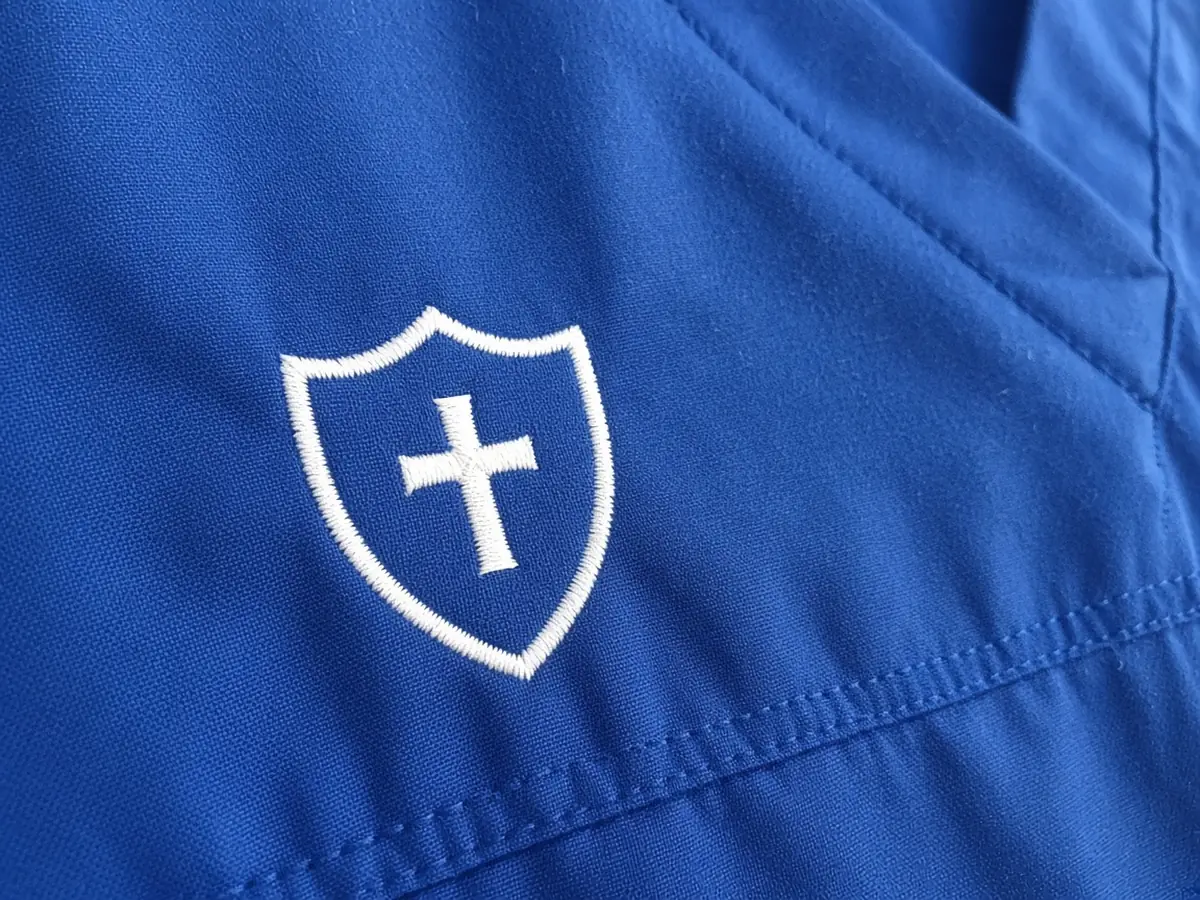
For a program, consistency over time matters more than the first price. Ask how the supplier keeps fabric, fit and color the same on every reorder, and approve a full sample, with embroidery, before bulk production. The questions in our guide on how to find a scrub manufacturer apply directly.
7. Roll out and plan reorders
- Pack orders by person or by department so issuing is quick
- Keep a simple record of who received which sizes
- Set a reorder point for each style, color and size
- Review the program once a year: what wears out first, which sizes run short, what staff ask for
Uniform programs with GoMedWear
GoMedWear manufactures scrubs, lab coats, jackets and caps in its own factory in Sialkot, Pakistan, for hospitals, clinic groups, schools and uniform distributors. The minimum is 50 pieces per style, in sizes XS to 5XL, with 30+ stock colors or a Pantone match. Every order starts with a sample, then production takes 15 to 25 days after approval. Embroidery and labels are done in-house, patterns and color runs stay on file for reorders, and orders ship DDP to your door. See hospital uniforms and nursing school scrub programs, or request a sample.
Frequently asked questions
How many scrub sets does each staff member need?
Enough to rotate through washing without running out. Programs usually issue several sets per person and keep a reserve for new starters.
Should every role have its own color?
Group roles that patients need to tell apart and give each group one color. Too many colors make the scheme hard to remember.
Can we add our logo to every garment?
Yes. Logos, department names and personal names are usually embroidered; agree the position and size on the approved sample.
How do we keep reorders matching the first order?
Use a supplier that keeps the approved sample, patterns and color standard on file, and reorder the same styles and colors.