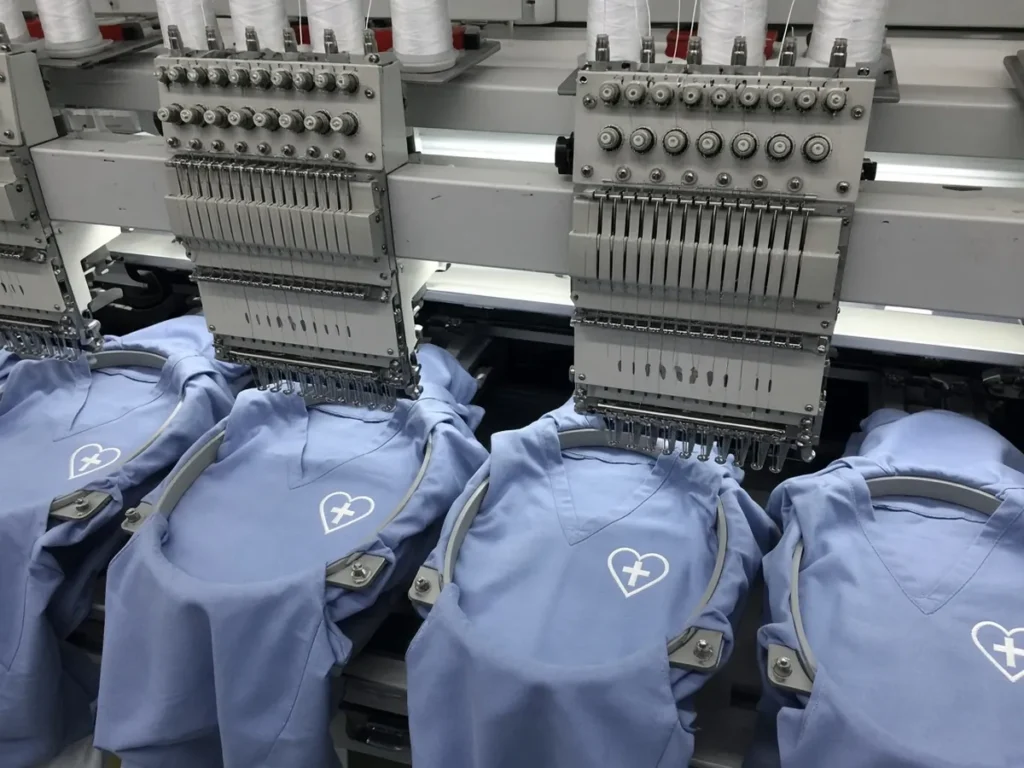
Putting a logo, name or design on scrubs sounds simple until you choose a method. Embroidery, screen printing, direct-to-garment (DTG) printing and sublimation each look different, last differently and suit different jobs. This guide compares the four so brands, clinics and schools can pick the right decoration for each garment.
The four methods at a glance
| Method | How it works | Best for | Watch out for |
|---|---|---|---|
| Embroidery | Thread stitched into the fabric | Logos, names and crests on chests, sleeves and caps; a premium, durable look | Very fine detail and gradients; large areas add weight and stiffness |
| Screen printing | Ink pushed through a screen, one screen per color | Simple designs in a few colors on larger runs | Set-up per color; less suited to photographic designs |
| DTG | Ink printed directly onto the garment like a paper printer | Full-color and detailed designs, smaller quantities | Works best on suitable fabrics; check wash results on your fabric |
| Sublimation | Dye transferred into polyester fibers with heat | All-over prints and patterns, such as printed caps and novelty scrubs | Needs high-polyester, light-colored fabric |
Embroidery
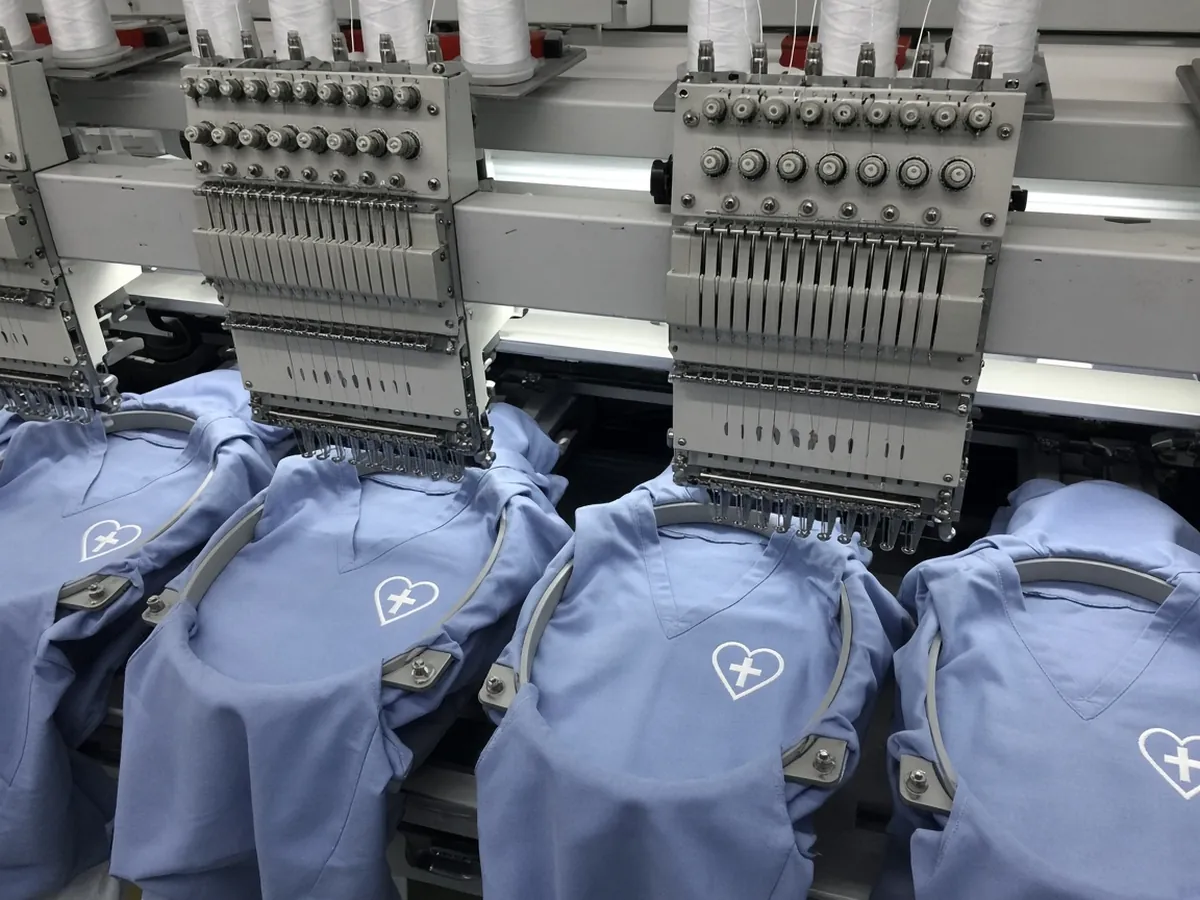
Embroidery is the standard for medical uniforms. It looks professional, stands up to repeated hot washing and does not crack or peel. It suits logos, department names, personal names and crests, usually on the left chest, a sleeve or a cap. Very small text and fine gradients do not stitch well, so simplify artwork for embroidery. See custom embroidery and embroidered lab coats.
Screen printing
Screen printing is efficient for a simple design in one to a few colors repeated across many garments. Each color needs its own screen, so set-up matters more on small orders. It suits back prints, event or campaign scrubs and bold graphics.
DTG printing
DTG prints the full design in one pass, including many colors and photographic detail, which makes it useful for detailed artwork and smaller quantities. Results depend on the fabric, so test the print on a sample of your chosen fabric and wash it before approving.
Sublimation
Sublimation dyes the design into polyester fibers, so it does not sit on top of the fabric and does not crack. It is ideal for all-over patterns, such as printed scrub caps and print scrubs, but it needs high-polyester, light-colored fabric.
How to choose
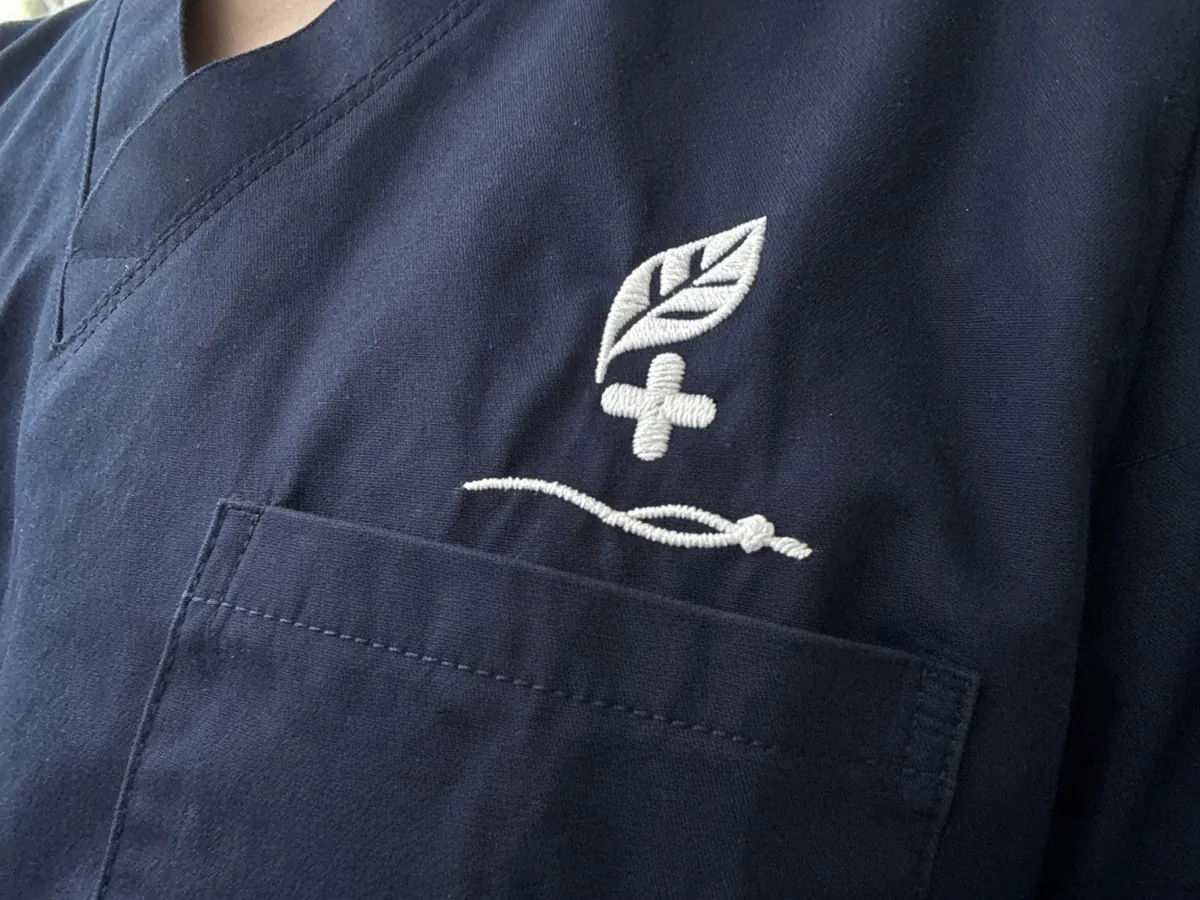
- Clinic or hospital logo and names: embroidery
- School crest on student scrubs: embroidery
- Bold one- or two-color graphic on many garments: screen printing
- Detailed full-color artwork, smaller runs: DTG
- All-over pattern on caps or tops: sublimation
Whatever the method, approve a decorated sample before bulk. Check position, size, colors and how the decoration looks after several washes.
Preparing artwork
- Send vector files (AI, EPS, SVG or PDF) where possible
- List thread or ink colors, with Pantone references for brand colors
- Give the position and finished size for each placement
- Supply a list of names if garments are personalized
Decoration at GoMedWear
GoMedWear manufactures scrubs, lab coats and caps in its own factory in Sialkot, Pakistan. Embroidery, DTG, screen printing and sublimation are done in-house, together with woven labels, care labels and hang tags, so decoration is checked in the same audit as the garment. Orders start from 50 pieces per style with a decorated sample first. See custom printing, custom scrubs, or request a sample.
Frequently asked questions
Is embroidery or printing better for scrubs?
For logos and names on medical uniforms, embroidery is the usual choice because it looks professional and lasts through repeated washing. Printing suits larger graphics and full-color designs.
Does embroidery survive hospital laundry?
Embroidery generally handles frequent washing well. Approve a sample and wash-test it the way your scrubs will be washed.
Can you sublimate on any scrub fabric?
No. Sublimation needs high-polyester, light-colored fabric; on cotton blends or dark colors, choose another method.
What file should I send for my logo?
A vector file such as AI, EPS, SVG or PDF, with color references and the size and position you want.